Friday, October 9, 2015
One of the classic articles around public administration addresses how administrators address complex problems. The author, Charles Lindblom, suggests that, rather than identifying global optima through comprehensive evaluation and careful comparison, administrators muddle through. Rather than looking at all alternatives we select those few that we can think of, make a decision about which of those few seems best and proceed, iterating these limited perspectives based on past practice using “successive limited comparisons.” Lindblom refers to global optimization as a root method and successive optimizations as a branch method.
One would think the root method is always the best way to go but faced with the incredible complexity of modern organizations coupled with high-impact crises, we should not be surprised that our administrative practice typically amounts to instinctual rapid prototyping in the context of limited time and limited information. Herbert Simon refers to such limitations as bounded rationality and suggests that rather than optimizing we simply “satisfice” We model what we believe to be happening, we gather some information, we consider alternatives, we guess and we test. We cycle this over and over, fumbling forward in an effort to fix multiple problems at one time. Lindblom suggests that the limited views of administrators in the branch method still leads to optimization as the administrator ‘feels their way’ and remains true to their values.
I am reminded of these principles as we are enmeshed in a very complicated conversion of a legacy ERP system to a statewide PeopleSoft system known as ctcLink . The promise of ctcLink was to create a single, centralized, efficient system to manage all aspects of college administration including student enrollment and records, faculty work, HR, finance, and data/reporting. The promise of CTC link was to allow institutions to begin a transformation from 20th-century practice to 21st century performance.
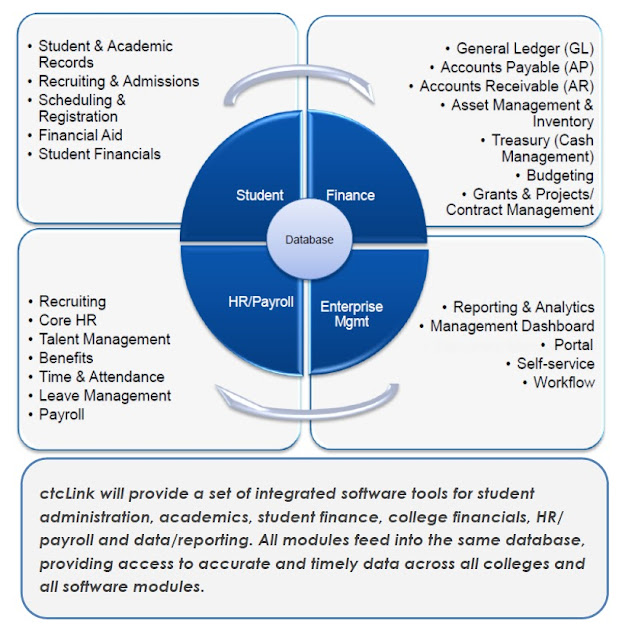
As complicated as these functions are, the technology needed to support integrated business processes, such as dynamic databases with interrelated objects, has been in corporate practice for decades. A technology plan built on assumptions of technology reliability, data stability and conversion integrity, smooth user acceptance and validation, and effective end-user training and expertise development was developed and deployed to two of the 34 colleges who will ultimately use the system. The plan was to invest intensively into these colleges who, as early adopters, could help troubleshoot and optimize the system as well as supporting diffusion to subsequent colleges.
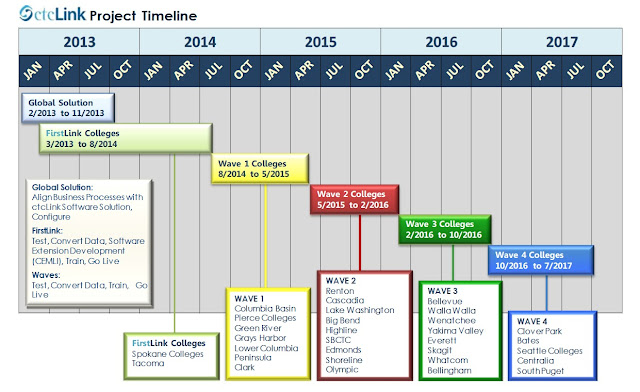
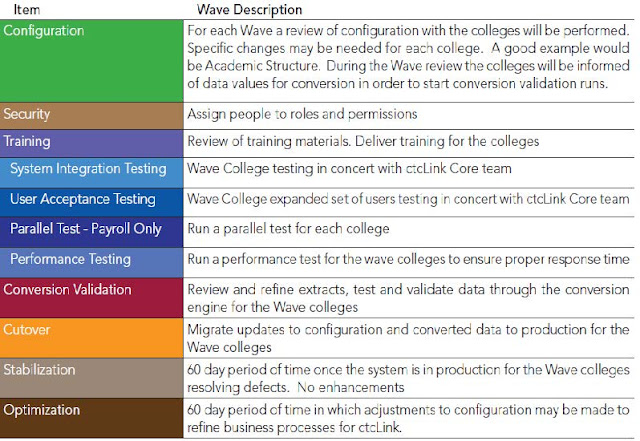
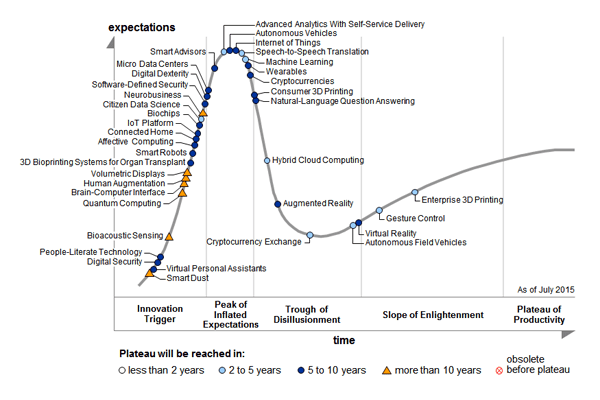
Like many technology adoptions, expectations were inflated, conversions were flawed, resources have been insufficient, and expertise development has been hindered as staff scramble to ‘put out fires.’ Well planned timelines have slipped considerably. These challenges in advance of public deployment have led to significant morale deterioration and inability to effectively utilize the system (referred to by the Gartner group as the “trough of disillusionment”). The timeline to productivity will be on the order of years, not months. In between, administrators across the institution will be engaged in local satisficing and reaction rather than the kind of forward thinking, global optimizations that are needed for such adoptions to generate performance improvements and enhanced outcomes.
While the Gartner hype cycle is intended to be more about a technology’s progress to usability my former colleague at Illinois, David Huang, cleverly points out that it also serves a useful purpose around technology adoption. The curve suggests something about how administrators ought to consider new adoptions.
The fact is we are years away from understanding what we have just adopted. It is likely that we have not yet reached the bottom of our trough of despair and disillusionment. But this is the time when administrators must be most diligent, most optimistic, and most energetic about the opportunity. While our staffs muddle through, we must encourage continued exploration. While our staffs despair, we must cheer, applaud, and appreciate. And as our staffs become more and more nearsighted to the work they must complete using a system they do not understand, we must identify a cadre of “seers” who can maintain a focus on the horizon and who can begin to lay the groundwork toward global optimization.
In practice, this crisis has meant putting aside important, but not critical, work in favor of being in the trenches, running financial aid lines, addressing student concerns, giving out food, expressing appreciation. This crisis has meant focusing on the positive and bounding concerns to those that matter most. Ironically, this crisis has also reminded that while we can bound the problems, the solutions an engaged workforce can provide are boundless. In a crisis, bound the problems, free the people.
References
Lindblom, C.E. (1959). “The science of muddling through.” Public Administration Review. 19(2): 79-88.
Simon, H. A. (1956). “Rational choice and the structure of the environment. Psychological Review. 63 (2): 129–138.


Leave a comment