January 27, 2012
I have a passion for learning. I have often attributed a key moment in my decision to come to Richland to a faculty member who, in my interview forum, said “we just want to talk about teaching and learning.” For me, that moment affirmed my sense that I had something to offer to Richland, which is to continually focus on improving learning–student learning, professional development, and organizational learning.
Problems of isolation, alienation, lack of motivation, lack of innovation, or lack of commitment to often are addressed by “one-ups”–trainings intended to meet immediate need. As a consequence, organizational approaches to “professional development” typically involve a smorgasbord of offerings without contextualizing it into the broader system. Orientations meet an on-boarding need and trainings meet specific compliance needs or are the result of a gap analysis which has uncovered some organizational pathology. But if the activities aren’t connected to something deeper, they can be fragmented and symptom oriented, reminiscent of the old saying, “To alleviate symptoms, take two aspirin and call me in the morning.” Don’t misunderstand, orientations and trainings are essential components of an overall professional development strategy, but the emphasis of the intervention is very much on the benefit to the organization, often in an extremely short time frame. Chris Argyis and Donald Shoen’s work on organizational learning called this “single loop learning” and it’s good stuff, but not enough.
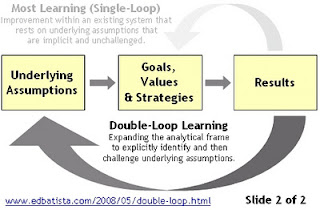
Focusing on the professional development of the employee, prioritizing their own development first, is altogether different as the focus shifts from the benefit to the organization short term, to benefits to the employee, who, over time, translates that new knowledge into the organization.
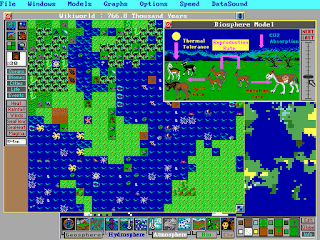
Richland community college has been very much aware of the importance of providing professional to faculty and staff. In 2008, for example, a CIP team recommended creation of a coordinated adjunct training program. The intent was multiple–to provide adjuncts with the necessary knowledge to navigate the college through orientation, to provide a handbook for use by adjuncts in reference to where they might find answers to their general questions on policy and resources, and appointment of an adjunct coordinator who could provide ongoing opportunities for adjuncts and provide support to ensure that adjuncts do not feel isolated or alienated. In 2009, the recommendations of the CIP team were realized, Jackie Roberts became our adjunct coordinator. I want to publicly thank Jackie for her commitment and dedication to working through the CIP team recommendations. As often happens, the CIP team work was based on “5 acres.” Jackie and others have done a tremendous job of cultivating those 5 acres. Elsewhere, CIP teams have improved local processes, and we’ve created a patchwork of 5 acre plots of quality without ensuring we built next to previous improvement. We need to have teams improving plots continuously and contiguously, a process I like to call terraforming after one of my favorite games, SimEarth.
In the case of professional development, we are acting to bring together professional development into one entity to ensure sustainability and advance teaching, learning, and technology. Over the past year, as the Richland Faculty Academy has taken root, providing professional development that is faculty driven, and we recognize that good teaching, creativity, and expertise with particular disciplines or approaches are not limited to full-time faculty, but reside among our adjunct faculty, as well. The Richland Faculty Academy is a place that all of our faculty can use to share and learn, and I invite all faculty to nominate a topic or volunteer through Kona Jones.
Organizational learning is first and foremost about culture. Cultures of learning are embedded throughout an organization and are focused, not just on the immediate return or desired skill, but on identifying and problem solving root causes in what Argyris and Shoen call “double loop learning.” Double-loop learning seeks deeper understanding first and leads to a knowledge that is more than just a reaction or adaptation, but rather is “generative.” We’re getting there!


Leave a comment